Multi-robot systems can greatly enhance efficiency
through coordination and collaboration, yet in practice, full-
time communication is rarely available and interactions are
constrained to close-range exchanges. Existing methods either
maintain all-time connectivity, rely on fixed schedules, or adopt
pairwise protocols, but none adapt effectively to dynamic spatio-
temporal task distributions under limited communication, result-
ing in suboptimal coordination. To address this gap, we propose
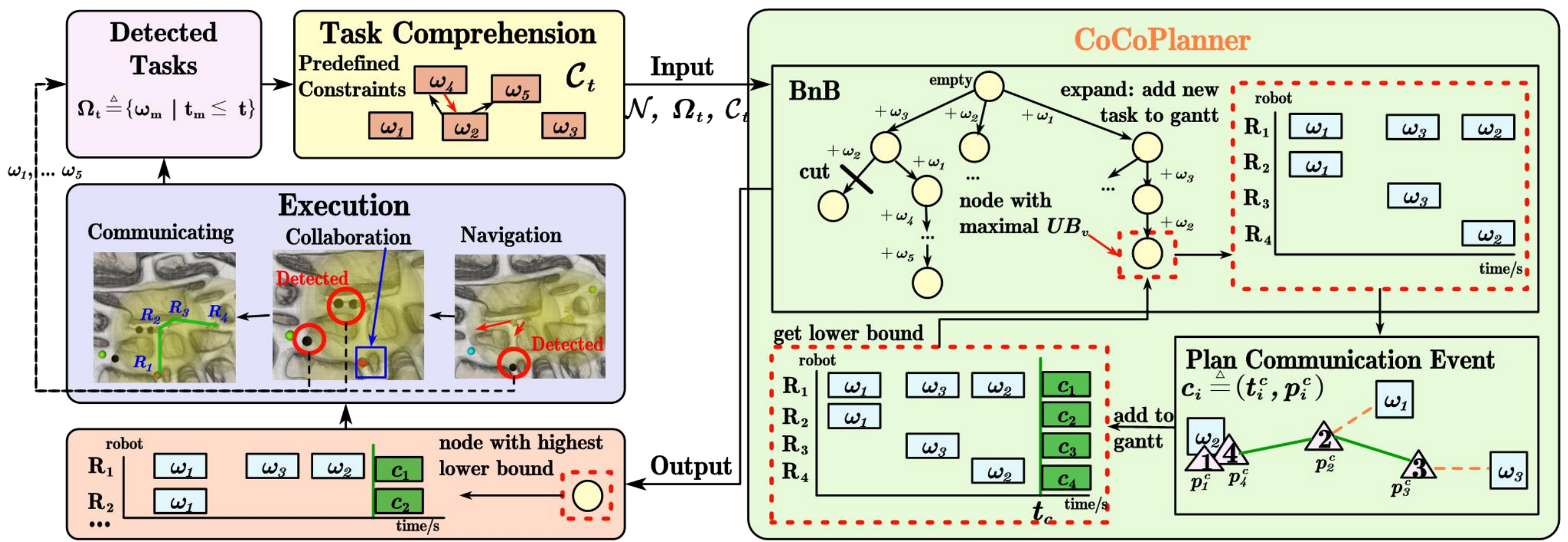
CoCoPlan, a unified framework that co-optimizes collaborative
task planning and team-wise intermittent communication. Our
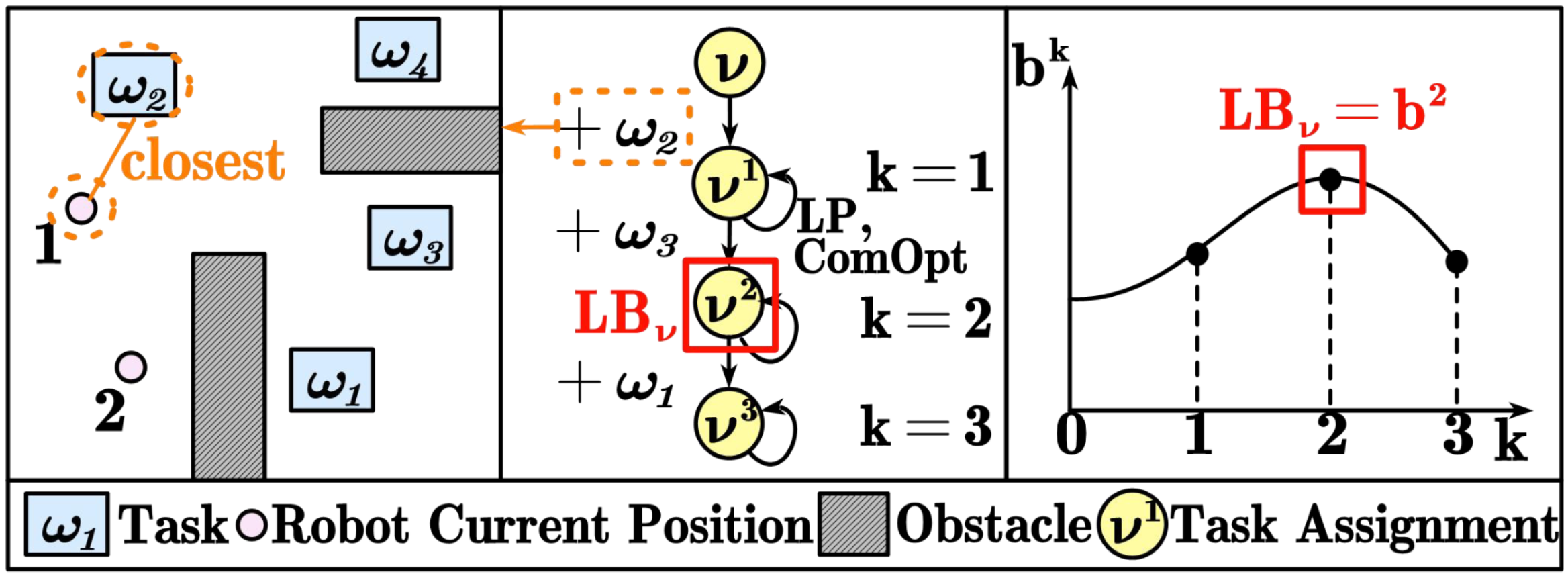
approach integrates a branch-and-bound architecture that jointly
encodes task assignments and communication events, an adaptive
objective function that balances task efficiency against communi-
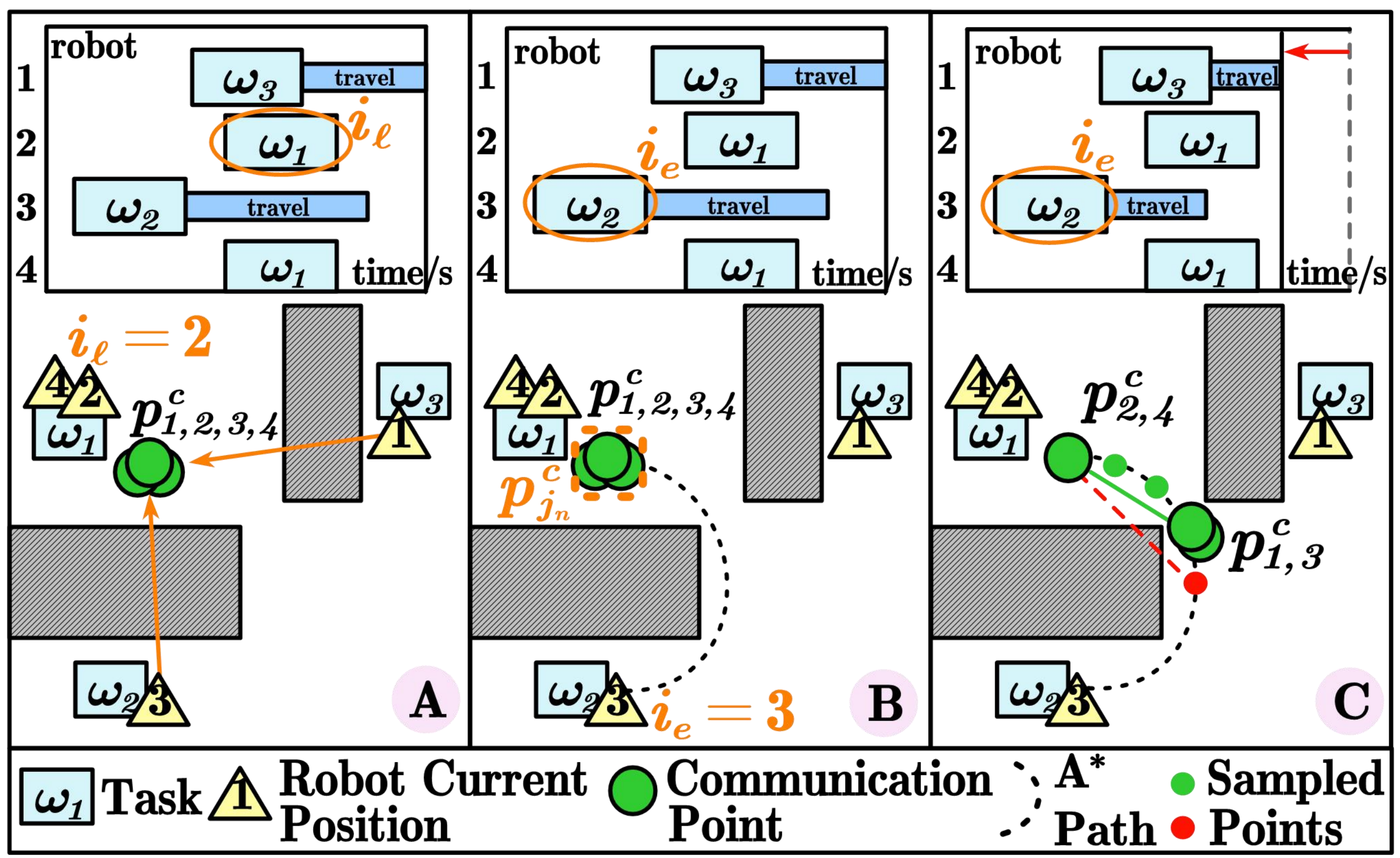
cation latency, and a communication event optimization module
that strategically determines when, where and how the global
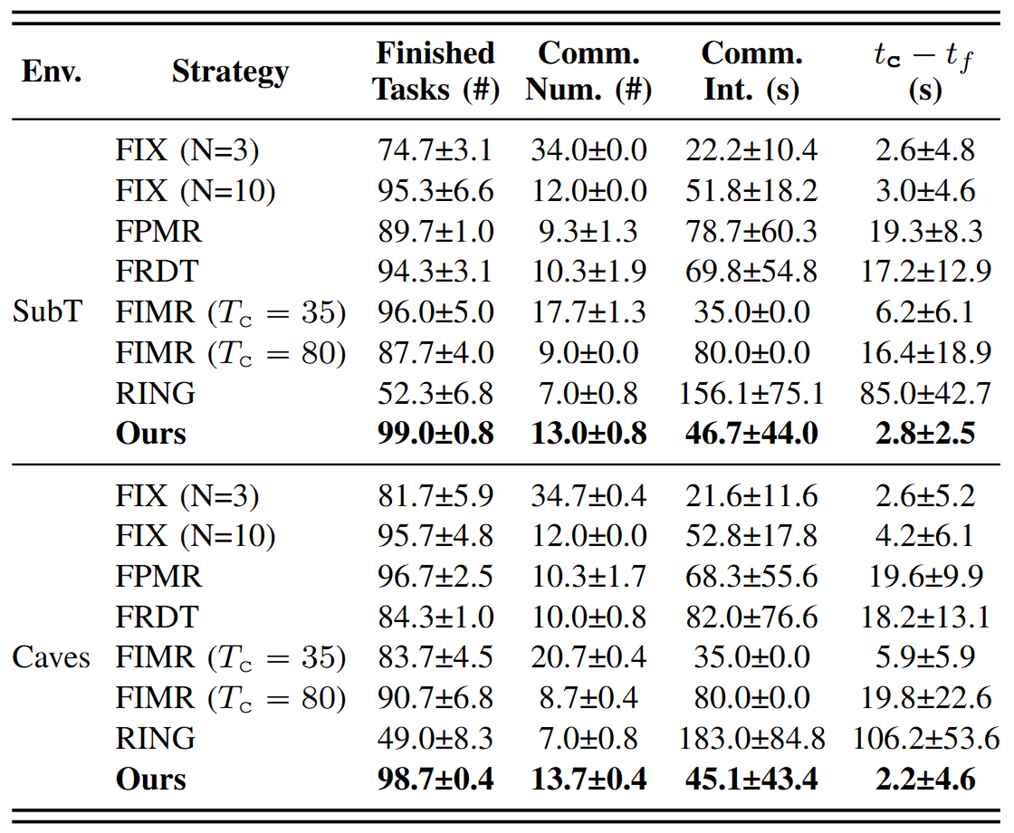
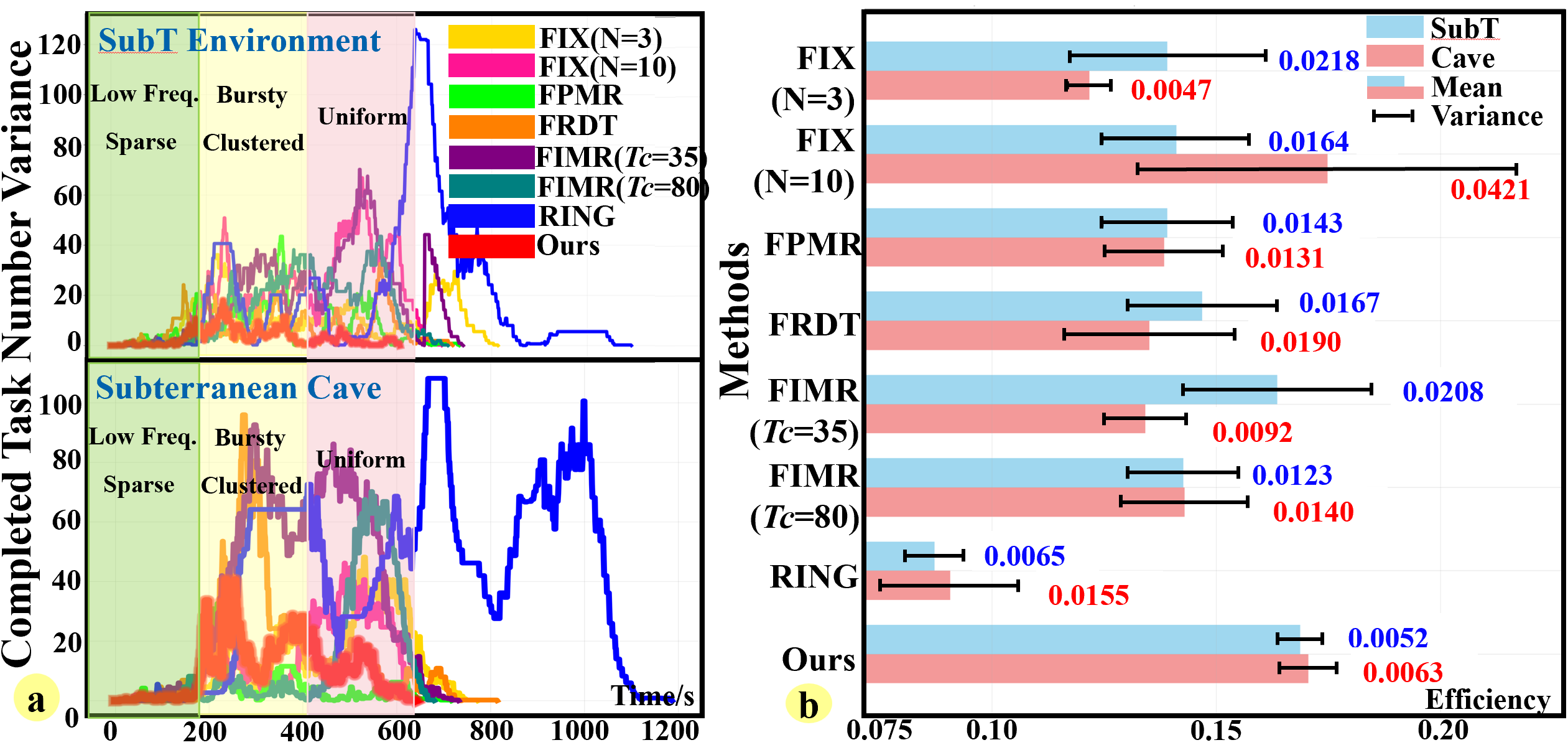
connectivity should be re-established. Extensive experiments
demonstrate that it outperforms state-of-the-art methods by
achieving a 22.4% higher task completion rate, reducing com-
munication overhead by 58.6%, and improving the scalability by
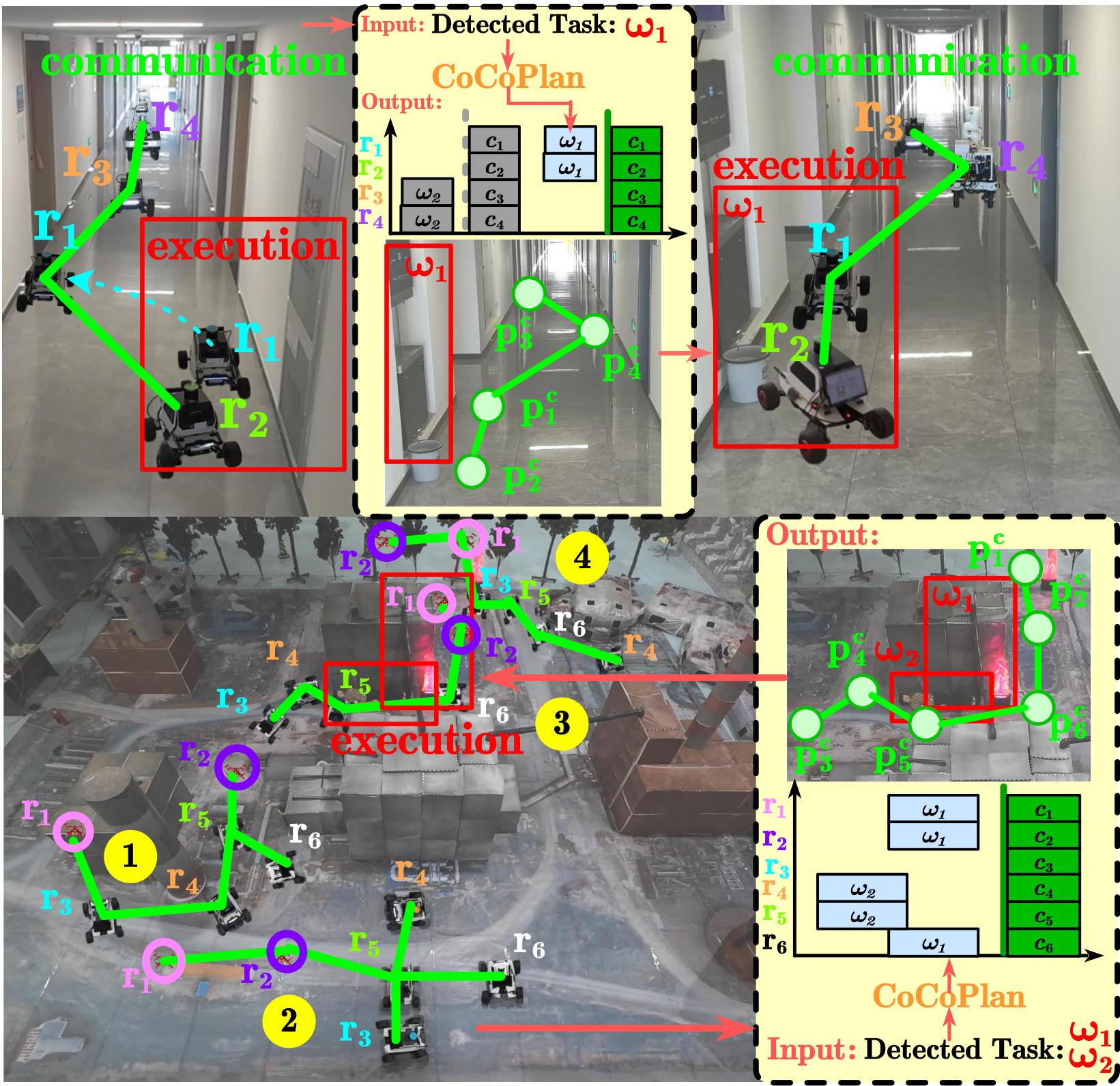
supporting up to 100 robots in dynamic environments. Hardware
experiments include the complex 2D office environment and
large-scale 3D disaster-response scenario.